The Tall Girl Guide to Getting Gym Machine Settings Right in One Minute
Quick Answer: Nearly every gym machine has a seat height, a pad position, and a start position, and the correct setup follows one rule: the machine’s pivot must line up with your joint’s axis of rotation. For tall women that almost always means seat lower, pad further out, and range of motion set longer. Check the pivot alignment first - everything else follows from it - and it takes about a minute per machine, once, because most gyms let you note your settings.
Here is the rule, the check, and the specific machines that need the most adjustment.
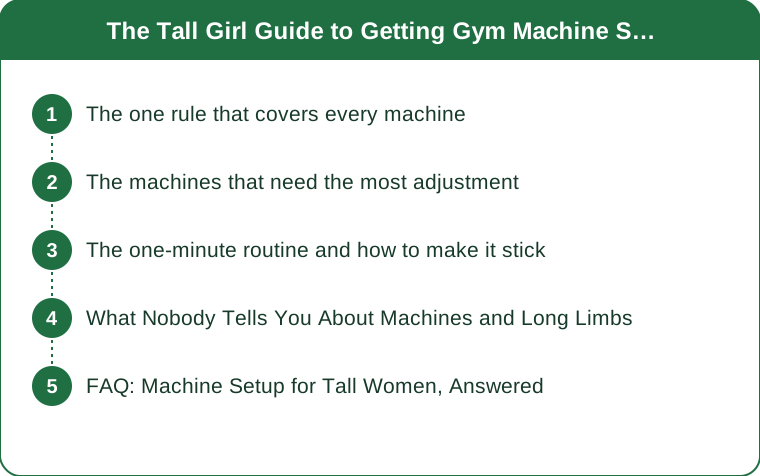
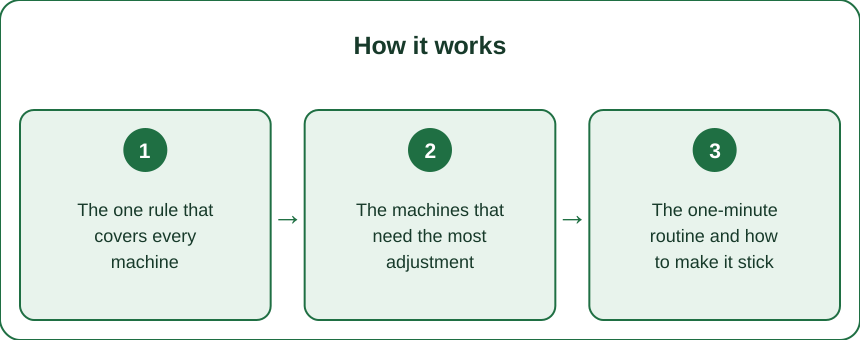
The one rule that covers every machine
Line up the machine’s pivot point with the joint it is meant to move. On a leg extension that is your knee; on a chest fly it is your shoulder; on a bicep curl machine it is your elbow.
When the pivots do not align, the machine fights you. The path of the lever does not match the path your joint wants to travel, so you feel resistance in the wrong place and your joint takes shear load rather than the muscle taking tension.
Tall bodies misalign in a predictable direction. Longer limbs mean your joints sit further from the seat, so the default setting places the pivot behind or below where your joint actually is.
The visible check is simple. Sit in the machine and look for the marked pivot - usually a bolt or a circular hub on the frame. Your joint should be level with it, viewed from the side.
Fix the pivot first, then everything else. Pad positions and start positions are all downstream of the pivot, so adjusting them first means redoing them.
And if the pivot cannot be aligned, the machine does not fit you. That is a real outcome for very tall users on some equipment, and the answer is a free-weight or cable alternative rather than using it misaligned.
The machines that need the most adjustment
Leg extension and leg curl: seat back position matters most. Slide the back pad so that your knee sits exactly at the pivot. Tall women usually need the back pad further back than the default.
The shin pad should sit just above the ankle bone, not on the shin mid-way. Too high shortens your lever and changes the load; too low is uncomfortable.
Chest press and shoulder press: seat height decides everything. The handles should sit at roughly mid-chest for a chest press and at shoulder level for a shoulder press. Tall users generally need the seat lower than the default, which is counterintuitive.
Lat pulldown: the thigh pad is the setting people ignore. It should be snug enough to stop you lifting off the seat, and tall women frequently find the maximum setting still too low - in which case sit further forward or use a different station.
Preacher curl and bicep machines: elbow at the pivot, armpit at the top of the pad. If your elbow sits below the pad edge, the machine loads your shoulder rather than your arm.
Cable machines are the most forgiving. Pulley height is continuously adjustable, so a cable version of almost any machine exercise will fit you better - which is worth knowing when a machine simply does not adjust far enough.
And the rowing machine and the bike both need their own setup, with saddle height and footplate position mattering more for long limbs than any other setting.
The one-minute routine and how to make it stick
Sit in the machine before loading it. Thirty seconds unloaded tells you whether the pivots line up and saves the awkward mid-set adjustment.
Check pivot alignment, then pad position, then start position - in that order, because each depends on the last.
Move through the full range slowly with no weight. If anything pinches, catches, or feels like it stops short, the setup is wrong, and it will be worse under load.
Write your settings down. Most machines have numbered positions. A note on your phone with the machine name and the numbers turns a one-minute setup into a five-second one forever.
Photograph the setting pins if the numbers are unclear. Some machines have unlabelled holes; a photo of the correct pin position is the fastest reference there is.
Expect the numbers to differ between gyms. Even the same manufacturer’s machines vary between models and generations, so keep separate notes for separate gyms if you use more than one.
And re-check after someone else uses the machine. This is the whole reason the routine exists - shared equipment defaults to the last person, and that person was probably shorter.
What Nobody Tells You About Machines and Long Limbs
Some machines genuinely will not fit you, and that is not your problem to solve. Above about 185 cm, certain leg presses and chest presses run out of adjustment. Use the cable or free-weight version instead.
Range of motion is not a virtue by itself. A longer limb travels through a greater range, so the same number of reps is more total work. Comparing your weights to a shorter training partner’s is not meaningful.
Machines with fixed handle spacing are the hardest to adjust for. Wide shoulders and long arms often want handles further apart than the frame allows, and cables solve this instantly.
Seat pads wear unevenly and change the effective height. An old compressed pad sits lower than a new one on the same setting, which is why the same number feels different on different machines.
Your setup changes with footwear. Anything with a foot platform shifts by whatever your sole thickness is, so a change of trainers is a reason to re-check.
Autumn gyms get busier, which makes this harder. Someone waiting is exactly when people skip the setup, and the minute you save costs you a worse set and a worse position.
And joint pain in a machine exercise is usually a setup problem before it is a load problem. Knee pain in a leg extension, shoulder pinching in a press - check alignment before reducing weight. Persistent pain deserves proper assessment; this is general information, not medical advice.
FAQ: Machine Setup for Tall Women, Answered
What is the single rule for setting up any machine?
Align the machine’s pivot point with the joint it is meant to move - knee on a leg extension, shoulder on a fly, elbow on a curl machine. Everything else follows from that.
Which direction do tall women usually need to adjust?
Seat lower, back pad further back, and range set longer. Longer limbs put your joints further from the seat than the default assumes.
How do I find the pivot point?
Look for the marked hub or bolt on the frame beside the seat. Sit down and check that your joint is level with it from the side. It takes about ten seconds.
What if the machine does not adjust far enough?
Then it does not fit you, which is a real outcome above roughly 185 cm on some equipment. Use the cable or free-weight version instead - cables are continuously adjustable and fit almost anyone.
Why does the seat need to be lower on a chest press?
Because handle height is fixed relative to the frame. To bring the handles to mid-chest for a taller torso, the seat comes down rather than up - which surprises most people.
Should I compare my weights to a shorter training partner?
Not directly. A longer limb travels through a greater range, so the same rep at the same load is more total work. Compare against your own numbers over time.
My knee hurts on the leg extension - is the weight too heavy?
Check the setup first. Knee pain there is usually the pivot sitting behind your knee joint, or the shin pad placed too high. Persistent pain deserves proper assessment - this is general information, not medical advice.
TL;DR:
- One rule: align the machine’s pivot with your joint. Knee on a leg extension, shoulder on a fly, elbow on a curl.
- Tall bodies misalign predictably: seat lower, back pad further back, range set longer.
- Check in order - pivot, then pad position, then start position. Each depends on the last.
- Shin pad just above the ankle bone, not mid-shin. Too high shortens your lever.
- Chest and shoulder press: seat lower than default. Handle height is fixed, so the seat comes down to meet it.
- Write the numbers down or photograph the pins. A one-minute setup becomes a five-second one.
- Cables fit everyone. When a machine runs out of adjustment - common above about 185 cm - use the cable version.
Joint pain in a machine exercise is usually a setup problem before it is a load problem. Check alignment before dropping weight; persistent pain deserves proper assessment - this is general information, not medical advice.
Keep Reading
This article is for general informational and styling purposes only. Fit, sizing, and product availability may vary.