Why Tall Women Should Set the Cable Machine Before the Weight
Quick Answer: Cable machines are set up for average limb lengths, so a tall lifter using a default pulley height loses part of the range where the muscle is most loaded. Setting the pulley so the line of pull matches your limb length - usually higher for rows and pulldowns, lower for chest work - matters more than the weight on the stack.
The cable row feels like nothing in the last few inches. The chest fly runs out of tension before your hands meet. The triceps pushdown is fine at the top and vanishes at the bottom.
You have been adjusting the weight to fix this. The variable that actually controls it is the height of the pulley, and it is free.
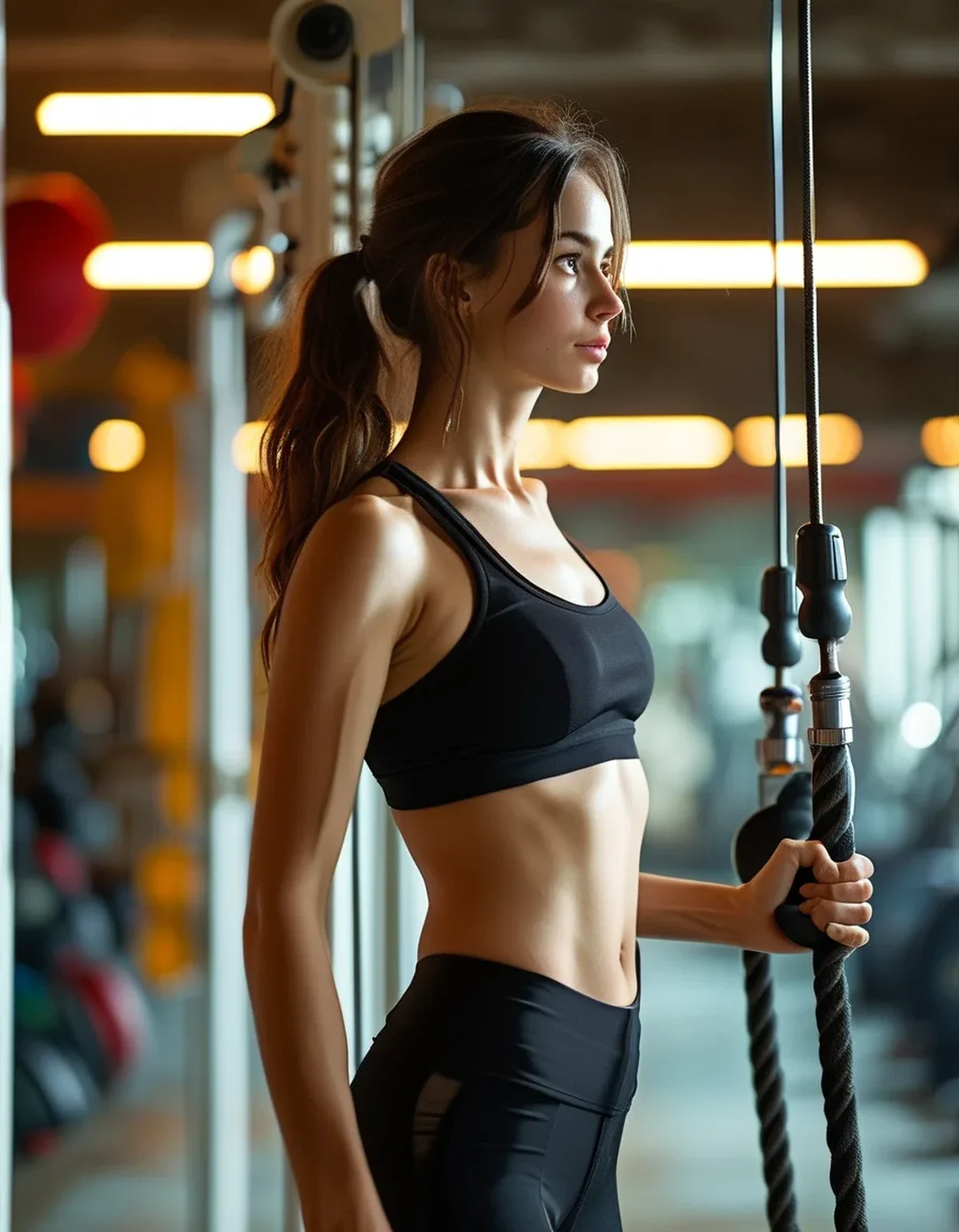
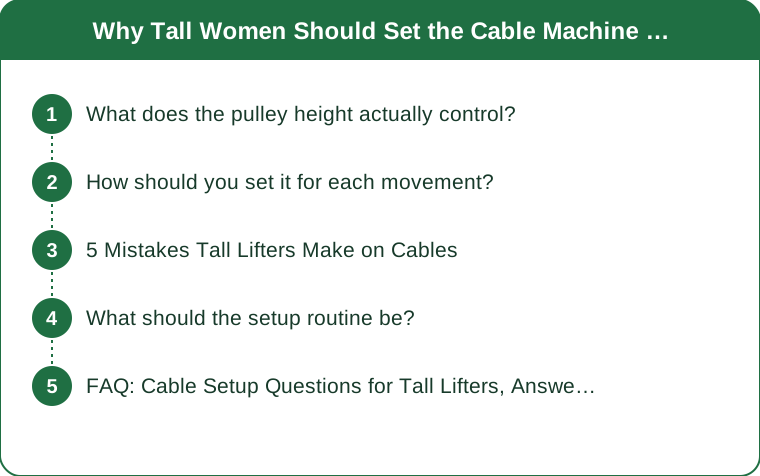
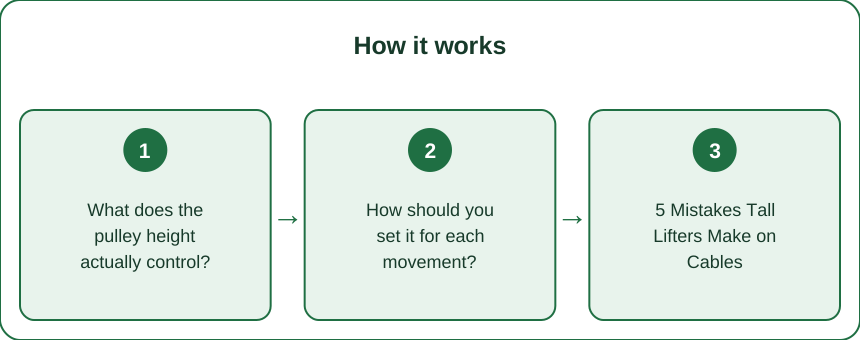
What does the pulley height actually control?
The angle between the cable and your limb, which is what determines where in the movement the resistance is highest.
A cable applies force along its line. The rotational demand at your joint depends on the angle between that line and the segment you are moving. When the cable is perpendicular to your forearm or upper arm, the demand is at its maximum. As the angle closes, the effective resistance drops even though the weight on the stack has not changed.
So a pulley set at the wrong height means the peak resistance lands at the wrong point in your range - usually early, where you are strong, and then falls away through the part where the muscle is most stretched or most contracted.
Longer limbs make this worse for two reasons. The arc your hand travels is longer, so the angle changes more across the movement. And the standard pulley positions were chosen for the arc of an average limb, so a longer arm sweeps through a range the machine was not set up for.
This is why tall lifters so often describe cable work as feeling less effective than free weights. The free weight always pulls straight down, so the geometry is predictable. A cable’s geometry is whatever the pulley position makes it, and nobody tells you to set it for your body.
How should you set it for each movement?
Match the pulley height to where you want the peak tension, adjusted for your reach.
Rows and face pulls. Set the pulley so the cable runs parallel to the line of your pull at the midpoint of the movement. For a tall lifter that usually means a slightly higher setting than the default, because your arms are longer and your torso sits further from the machine.
Pulldowns and pull-throughs. Higher than you think for pulldowns, and further back for pull-throughs, since a longer arm means the cable reaches you at a shallower angle at the same setting.
Chest flys and presses. The classic tall problem here is running out of tension before the hands meet. Setting the pulleys lower and stepping further forward keeps the cable angle useful through the whole arc.
Triceps and biceps work. Small changes make large differences because the limb segment is short relative to the cable length. A pushdown from a pulley set a notch lower changes where the resistance peaks considerably.
Lateral raises and rear delt work. These are where tall lifters gain the most, because the cable holds tension at the bottom of the range where a dumbbell has none. Setting the pulley at or just below hand height at the start position is the version that works.
The general rule: set the pulley, take your position, and run through the movement with no weight first. Ten seconds of checking where the tension lives is worth more than any amount of adjusting the stack.
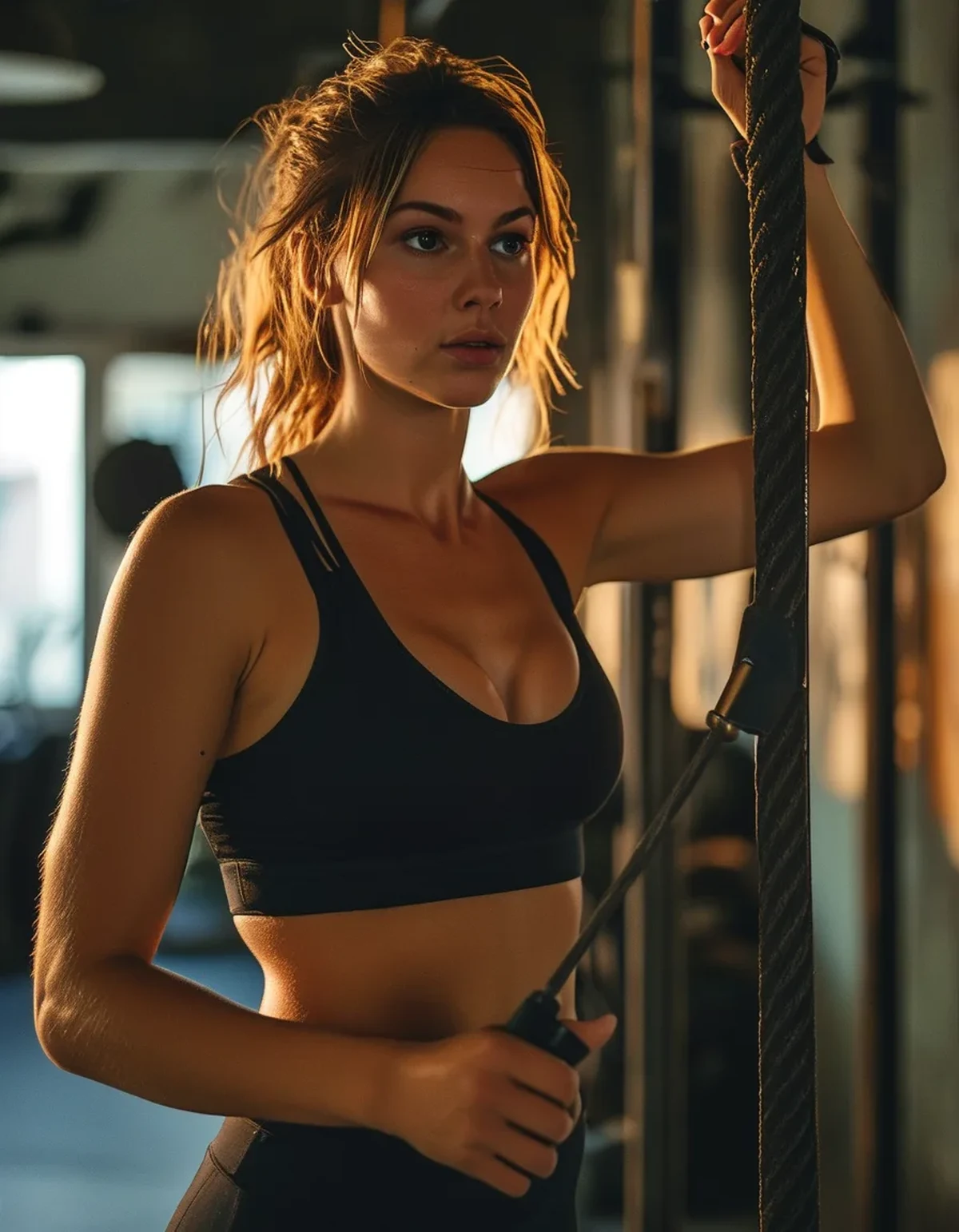
5 Mistakes Tall Lifters Make on Cables
1. Using the same setting as the person before them. Cable stations are shared and the pin and the pulley both stay where the last user left them. Assuming a machine is at a neutral default is the root of most of this.
2. Standing at the default distance. How far you stand from the tower changes the cable angle as much as the pulley height does. Longer limbs usually want more distance, and stepping back one pace often fixes a movement entirely.
3. Chasing the weight rather than the range. A tall lifter moving a longer arc does more mechanical work at the same load, so matching a shorter training partner’s number is not a like-for-like comparison. Range and tension quality beat the number on the stack.
4. Ignoring attachment length. A longer strap, a rope versus a bar, or a single handle changes the effective cable length and therefore the geometry. Tall lifters benefit disproportionately from longer attachments, and most gyms have them somewhere.
5. Giving up on cables and going back to dumbbells. Cables are actually better suited to long limbs than free weights for several movements, because they hold tension in the stretched position where a dumbbell offers none. Abandoning them because the default setup felt poor is a real loss.
What should the setup routine be?
Four steps, thirty seconds, every station.
Set the pulley height before you touch the pin. Height first, load second, always. This single reordering fixes most of what this article describes.
Choose the attachment for your reach. A longer rope or strap gives you more usable range, and a straight bar constrains a wide grip on broad shoulders.
Position yourself and run one rep with a light load. Feel where the tension peaks. If it peaks at the start and dies at the end, the pulley is too high or you are too close. If it only arrives late, the reverse.
Then load it. And expect the weight to be different from what you used at the previous height, because you have changed the mechanics rather than just the setup.
A few extras worth knowing. Write your settings down - pulley notch, distance, attachment - in your training log alongside the weight. A cable exercise recorded as just weight and reps is not reproducible, and this is why cable progress feels inconsistent for so many people.
Use the unilateral versions more. Single-arm cable work lets you set the geometry precisely for one limb and is particularly effective for long-limbed lifters, since it removes the compromise that a bar or a double-handle setup forces.
And carry the principle to the rest of the gym. Bench angles, seat heights, pad positions, and foot plates are all set for average proportions, and all of them reward being set for your body before the weight is chosen. The cable machine is simply where the effect is most obvious.
This is general training information rather than personal coaching - if a movement causes pain rather than effort, stop and get it looked at.
FAQ: Cable Setup Questions for Tall Lifters, Answered
Should I use lighter weights because my range is longer?
Often yes, at least initially, and it is not a downgrade. A longer range at the same load is more total work, so matching someone shorter rep for rep and pound for pound is asking more of yourself, not less.
Are cables better or worse than free weights for tall people?
Better for several things, particularly anything where the stretched position is where you want tension - flys, lateral raises, rear delts, pull-throughs. Free weights remain excellent for the big compound patterns. Use both, and set the cables up properly rather than writing them off.
What if the machine does not adjust high or low enough?
Change your position rather than the machine - kneeling, seated on a bench, or standing further back all change the effective angle. A half-kneeling position in particular solves a lot of pulley-range problems and adds a stability benefit at the same time.
TL;DR:
- Pulley height determines where in the range the resistance peaks, and longer limbs sweep a longer arc through a machine set for average ones.
- Set the pulley and your distance from the tower before you choose the weight, and test with a light rep first.
- Longer attachments and unilateral variations both suit long limbs better than the default double-handle setup.
- Record pulley notch and distance in your log alongside the load, or the exercise is not reproducible.
Cable work is not less effective for tall women. It is more sensitive to setup, and the setup is the part nobody adjusts.
Keep Reading
This article is for general informational and styling purposes only. Fit, sizing, and product availability may vary.