Why a Tall Frame Changes Which Gym Shoes Actually Work
Quick Answer: A taller lifter has a higher centre of mass and longer levers, which means balance demands are greater and the ankle has to travel through more range in a squat. Cushioned running shoes make both worse by adding an unstable compressible platform, while flat shoes give a stable base and heeled lifting shoes reduce how much ankle range the squat demands. Most tall women are better served by two pairs than by one do-everything trainer.
You wobble in squats, your heels lift, and you have been told to work on ankle mobility.
Some of that is mobility. A good part of it is the 25mm of foam you are standing on.
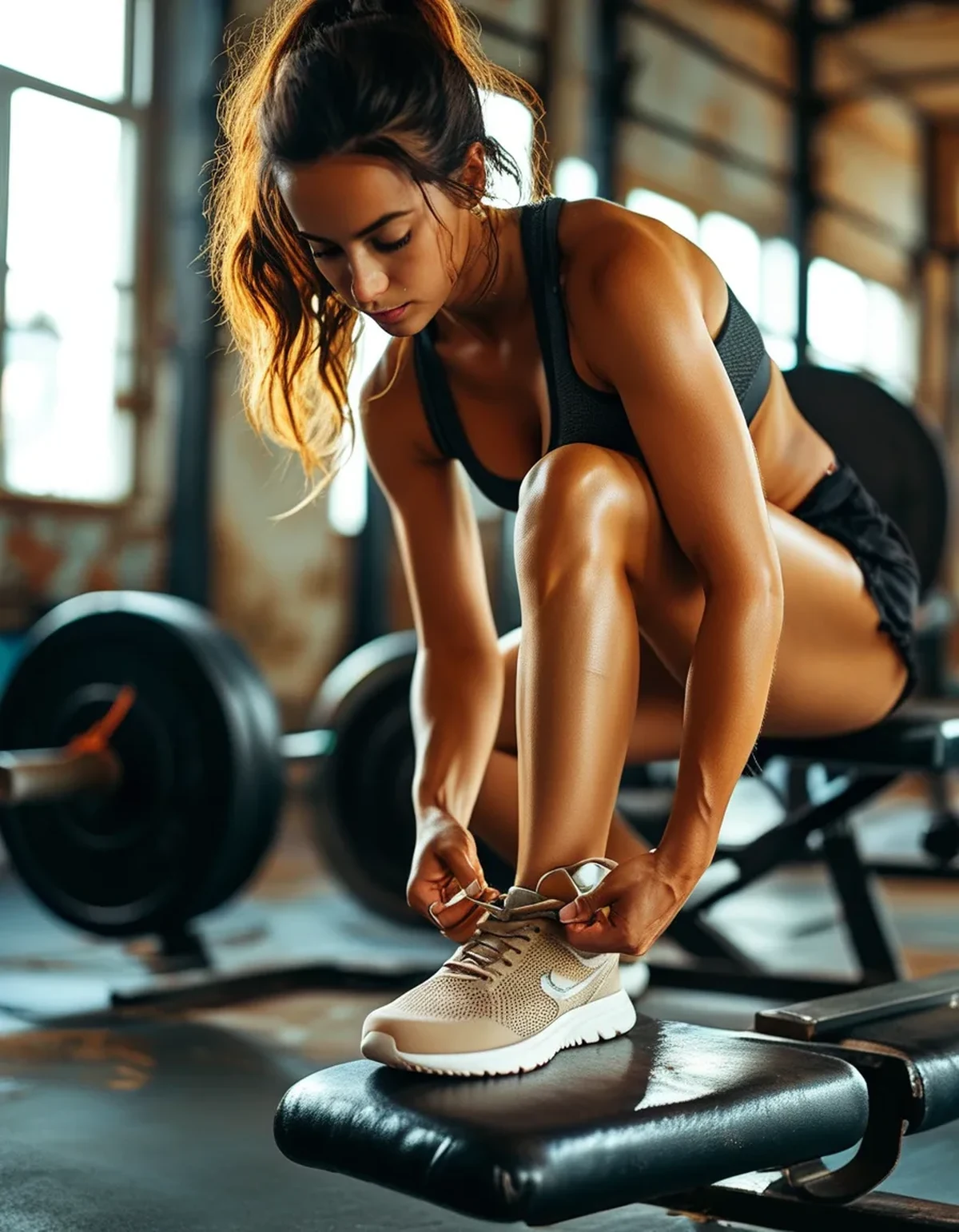
Why does height change the footwear equation?
Because balance and range demands both scale with limb length.
A higher centre of mass is inherently less stable. Small deviations at the base produce larger movements at the top, which is why tall lifters generally find balance-dependent lifts harder — not because of weaker stabilisers, but because the geometry amplifies every wobble.
A compressible sole is an unstable base. Cushioned running shoes are designed to compress asymmetrically under load, which is exactly right for running and exactly wrong for lifting. On a tall frame, that compression translates into a larger movement at the shoulders and bar.
Longer femurs demand more ankle dorsiflexion in a squat. With a longer thigh, the knee has to travel further forward for the hips to descend, and that forward travel comes from the ankle. A tall lifter with average ankle mobility will hit the limit sooner than a shorter lifter with identical ankles, and the failure shows as heels lifting or the chest dropping.
A raised heel directly addresses that. Weightlifting shoes have a rigid heel of typically 15-20mm, which effectively gives you more usable dorsiflexion without changing your ankle at all. For tall lifters this often transforms squat depth and torso angle within one session — which is a strong indication that the constraint was never strength.
What should actually be in the gym bag?
Two pairs, in most cases, and they cost less than one pair of premium trainers.
Flat, firm shoes for deadlifts, hip hinge work, carries and most machine work. A minimal sole keeps you closer to the floor, which shortens the range on a deadlift and gives a genuinely stable base. Canvas trainers, deadlift slippers and minimalist trainers all do this job, and none of them are expensive.
A raised, rigid heel for squats and any front-loaded lifting. Proper lifting shoes are the ideal, and a stable heeled trainer is a reasonable substitute. The critical property is that the heel is rigid rather than cushioned — a squashy heel is worse than no heel.
Running shoes for running, and only running. They are excellent at their job and a poor platform for anything involving heavy vertical load.
Cross-trainers as a compromise if you genuinely only want one pair, with the understanding that a compromise shoe is worse at both tasks. A flat, firm cross-trainer with a wide base is a reasonable single choice; a heavily cushioned one is not.
Sizing note that matters for tall women specifically: larger women’s shoe sizes are often built on a scaled-up version of a smaller last, which can mean a narrow shoe with insufficient toe box for a genuinely larger foot. Trying men’s or unisex sizing is worth doing, and the fit is frequently better through the forefoot.
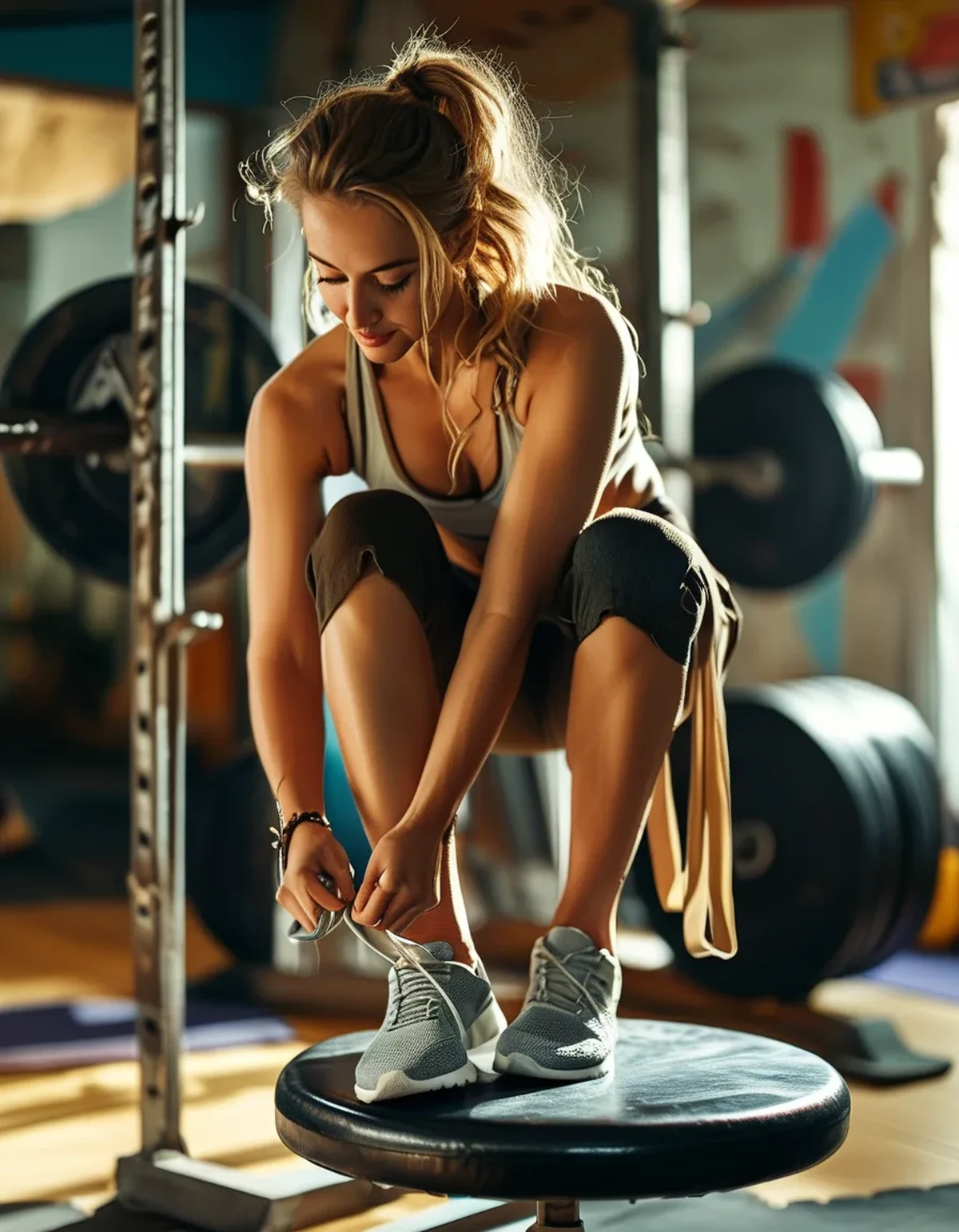
Myth vs Fact: Gym Shoes and Height
Myth: heeled lifting shoes are cheating or a crutch. Fact: they are equipment, in the same sense that a barbell is equipment. They change the geometry of the movement in a way that suits certain body proportions, which is why they are near-universal in weightlifting and why long-femured lifters benefit most.
Myth: you should fix your ankle mobility instead. Fact: do both. Ankle mobility work is worthwhile and it has a ceiling set partly by bone structure, and it does not change your femur length. Using a heel while you improve mobility means the intervening months of training are productive rather than compromised.
Myth: barefoot is best for everything. Fact: barefoot or flat is excellent for deadlifts, hinges and stability work, and it is often the wrong choice for a deep squat with a long femur, where the ankle range simply is not there. Different lifts, different answers.
Myth: more cushioning protects your joints. Fact: under vertical load, cushioning reduces stability without meaningfully reducing joint load, because the forces in a squat are slow and controlled rather than impact-based. Cushioning matters for repeated impact; it does not for lifting.
Myth: a wide base is only about foot width. Fact: for a tall lifter, the width of the shoe’s platform is a balance asset in its own right. A shoe with a wide, flat outsole gives a larger base of support, which matters more the higher your centre of mass sits.
Myth: one good pair covers everything. Fact: this is the belief that keeps most people in running shoes for squats. Two cheap purpose-appropriate pairs beat one expensive general one, and the total cost is usually lower.
What else changes with a tall frame in the gym?
Several things worth adjusting at the same time, since they share the same cause.
Set machine seats and pads for your limb length, not by the number. A tall user usually needs the seat lower and the range restricted differently on chest press, lat pulldown and leg extension. Two minutes of setup is the difference between a machine that trains you and one that puts your joints in awkward positions.
Expect a longer bar path on everything. More range means more work per rep, which means the same weight is genuinely harder for you than for a shorter training partner. Comparing loads is a losing game; comparing progress is not.
Consider elevated heels or a wider stance for squats specifically. Stance width is the other lever on the same problem, and a slightly wider stance with the toes out reduces the ankle range required.
Sumo deadlifts are often kinder to tall lifters than conventional, because the wider stance shortens the range and reduces the amount of forward lean required.
Longer warm-ups genuinely help, since more joint range has to be prepared and there is more tissue to bring up to temperature. This matters more as the gym gets colder through autumn — a warm-up that was adequate in August is often not in November.
And check the rack and bench heights. Rack pin positions, bench height relative to your leg length, and the height of the pull-up bar are all set for average users, and small adjustments make a large difference to how well a session runs.
FAQ: Tall Women and Gym Footwear, Answered
Are lifting shoes worth it if I only squat once a week?
If squats are a priority in your programme, yes — they are a one-off cost that lasts years, and the change to squat quality is usually immediate and obvious. If you squat rarely, a flat firm shoe plus a slightly wider stance covers most of the benefit for nothing.
Can I just put plates under my heels?
It works and it is what people do before buying shoes. The drawbacks are that plates are unstable at the edges, the height is not adjustable in small increments, and it is awkward to set up every session. As a test to see whether a heel helps you, it is perfect — do that before spending anything.
What about lifting in socks?
Many gyms prohibit it for hygiene and safety reasons, and where allowed it gives you the flat, close-to-floor position that suits deadlifts. The downside is zero protection if a plate or dumbbell is dropped, which is a real risk worth weighing. Deadlift slippers exist precisely to give the same feel with a thin protective layer.
TL;DR:
- A higher centre of mass amplifies instability, and cushioned soles compress asymmetrically — so running shoes make tall lifters wobble more.
- Longer femurs demand more ankle dorsiflexion in a squat, which is why heels lift and chests drop before strength runs out.
- Carry two pairs: flat and firm for deadlifts, hinges and carries; rigid raised heel for squats and front-loaded work.
- Test the heel with plates under your heels before buying anything.
- Set machines for your limb length, consider sumo and wider stances, and lengthen your warm-up as the gym cools.
The reason so many tall women conclude they are bad at squats is that they have been assessing themselves on an unstable platform with insufficient ankle range for their proportions. Change the platform first, and then find out what your mobility work actually needs to address.
Keep Reading
This article is for general informational and styling purposes only. Fit, sizing, and product availability may vary.