Why 7/8 Leggings Become Full Length When You're Tall
Quick Answer: Legging lengths are cut to a fixed inseam, not to a proportion of your leg. A 7/8 is designed to end above the ankle bone on an average inseam - on a longer one, that same fixed measurement lands at or below the ankle, which is where full-length is supposed to sit. The length name describes the garment, not where it lands on you. Shop by inseam number, and treat the style name as decorative.
A 7/8 is not a proportion.
It is a fixed measurement with a proportional name.

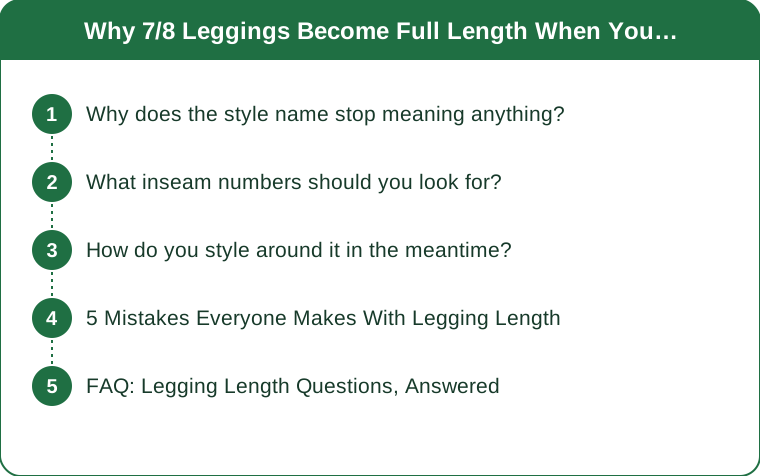
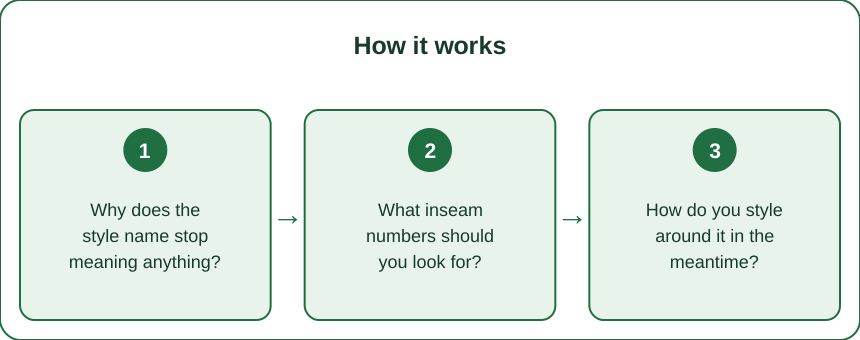
Why does the style name stop meaning anything?
Because it was defined against an average inseam and then applied to everyone.
Length names describe a fraction of a notional leg. Seven-eighths of a standard inseam ends above the ankle bone. On a longer leg, seven-eighths of your leg is a longer measurement than what the brand actually cut.
But brands cut a fixed inseam per style. They do not scale the crop by size in most ranges. A size small 7/8 and a size large 7/8 often share the same inseam - which means the intended look only happens on one height.
So the effect ladders downward as height rises. Full-length becomes a 7/8, a 7/8 becomes a crop-that-looks-like-full-length, and a capri becomes something else entirely. Every style shifts one step on a longer leg.
The ankle break is what carries the styling. A deliberate gap between hem and shoe is what makes a 7/8 read as intentional. Losing that gap makes the same garment read as a full-length pair that is slightly short, which is the opposite impression.
And full-length becomes genuinely short. The pair intended to reach your ankle bone now sits above it, which reads as accidental. This is the specific look that bothers people and it is a grading issue, not a fit failure.
None of which appears on the label. The inseam number does appear, usually - which is why it is the only thing worth reading.
What inseam numbers should you look for?
Your own measurement, plus a simple rule for each style.
Measure your inseam properly. Barefoot, from the crotch seam of well-fitting trousers to the floor, or measured directly against your leg. Write it down and keep it in your phone - it is the single most useful number in your wardrobe.
For full-length, look for an inseam close to your own measurement. Leggings should reach the ankle bone or just below when worn. A few inches short of your inseam is where full-length becomes 7/8 on you.
For an intentional 7/8, subtract a couple of inches from your inseam. That gives the visible ankle break the style is supposed to have. You will usually need a brand’s full-length in a tall size to get this look, not their 7/8.
For a capri, subtract considerably more. The mid-calf position is the target, and standard capris frequently land awkwardly just below the knee on a long leg. This is the length most worth buying tall.
Prefer brands offering multiple inseam options. Some activewear brands publish two or three inseams per style. This is the market solving the problem properly, and it is worth rewarding with your money.
And check whether the tall version changes the rise. Adding inseam without adding rise means the waistband sits low, which is a separate and equally annoying problem. Rise and inseam are two different numbers.

How do you style around it in the meantime?
Four adjustments that make a too-short pair look deliberate rather than accidental.
Wear them with a higher shoe. A trainer with a taller collar, or an ankle boot, closes the gap and makes the hem position look intentional. The shoe is doing the proportional work.
Add a visible sock. A crew sock with a cropped legging reads as a styling choice and neutralises the length question entirely. This is the easiest fix and currently reads as current rather than as compensation.
Stack a longer layer on top. A longer top or an oversized shirt shifts attention up the outfit and changes the proportion of the whole look. The eye reads the total proportion, not the hem in isolation.
Go deliberately shorter instead. If a pair is going to be short anyway, a proper cropped or capri length worn confidently reads far better than a full-length that missed. Commit to the crop rather than hovering between two lengths.
Avoid the exact worst zone. The awkward point is a hem that sits just above the ankle bone with a low-cut shoe and no sock - it reads as too small rather than as cropped. Either shorter, or covered by a higher shoe.
And use the short pairs for their best purpose. Under long trousers, for lower-body work in the gym, or with boots in autumn. A pair that fails one job usually does another one well.
5 Mistakes Everyone Makes With Legging Length
Sizing up to get length. Adding a size adds width everywhere and only a little length, so you end up with a loose waistband and a hem still in the wrong place. Length comes from a tall cut, not a bigger size - this is the most expensive misunderstanding in tall shopping.
Trusting the style name. 7/8, full-length, and ankle-length are not measurements. Only the published inseam tells you anything, and it is usually there if you look for it.
Not knowing your own inseam. Almost nobody does, and it makes every purchase a guess. Two minutes with a tape measure fixes this permanently.
Ignoring the rise. A tall pair that adds inseam without adding rise sits below your natural waist, which is why it rolls down. Check both numbers, not just the leg.
Buying the same brand repeatedly hoping it changed. Brands cut consistently. If a brand’s tall range does not work for you, it will not work next season. Move on and keep a short list of brands that do.
And the bonus mistake: assuming shorter is a defect. A confidently worn crop with a visible sock and a higher shoe reads better than a full-length that came up short. Commit to a length rather than being caught between two.
FAQ: Legging Length Questions, Answered
How do I measure my inseam accurately?
Stand barefoot against a wall, place a book firmly at your crotch, and measure from the top of the book to the floor. Doing it against a wall with a book is far more accurate than measuring a pair of trousers you already own.
Do leggings stretch out to become longer?
Slightly, and not reliably. Stretch adds length under tension and it returns after washing. Never buy short expecting them to grow - the length after a wash is the real length.
Why do my leggings ride up mid-workout even when the length is right?
Usually rise, waistband width, or fabric recovery rather than length. A high wide waistband with good recovery stays put; a thin band on a long torso slides down and takes the hem with it.
TL;DR:
- Length names are fixed inseams with proportional names - a 7/8 lands like a full-length on a longer leg.
- Every style shifts one step on a tall frame: full-length reads short, 7/8 reads full-length.
- Shop by published inseam number, and know your own measurement.
- Sizing up adds width, not length - it is the wrong lever entirely.
- A visible crew sock and a higher shoe make a short pair read as deliberate.
Measure your inseam against a wall this week and put the number in your phone. Every legging purchase after that is a comparison, not a gamble.
See It in Motion
Seen here: High Waist Yoga Leggings with Side Pockets — shop it on bubblelime.com
Keep Reading
This article is for general informational and styling purposes only. Fit, sizing, and product availability may vary.