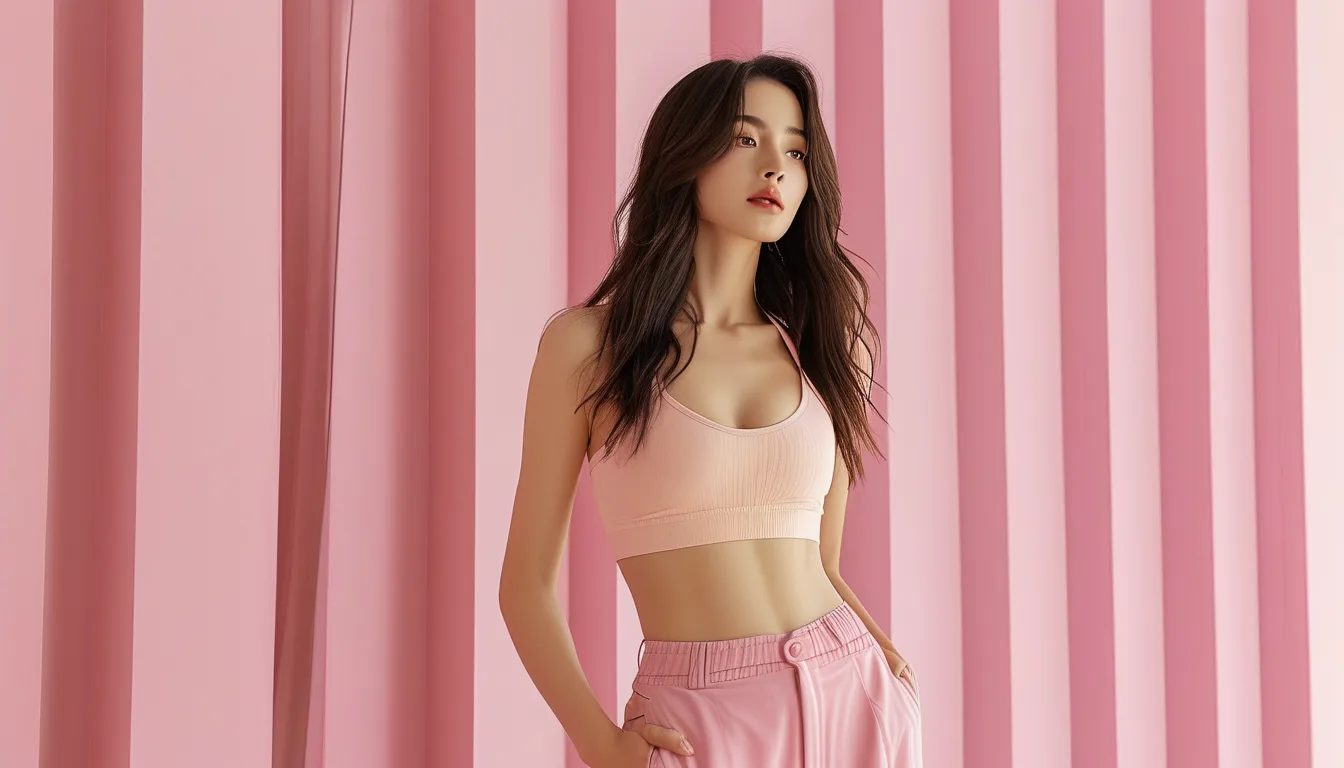
Why a Crop Top Length Behaves Completely Differently on a Long Torso
Quick Answer: Crop tops are graded by body length measured from the shoulder seam, and body length is graded far less across sizes than width. A longer torso means the same stated length ends higher relative to your waist — often several centimetres higher than the product photos show. Shop by stated body length, not by the word crop, and add roughly the difference between your torso length and average.
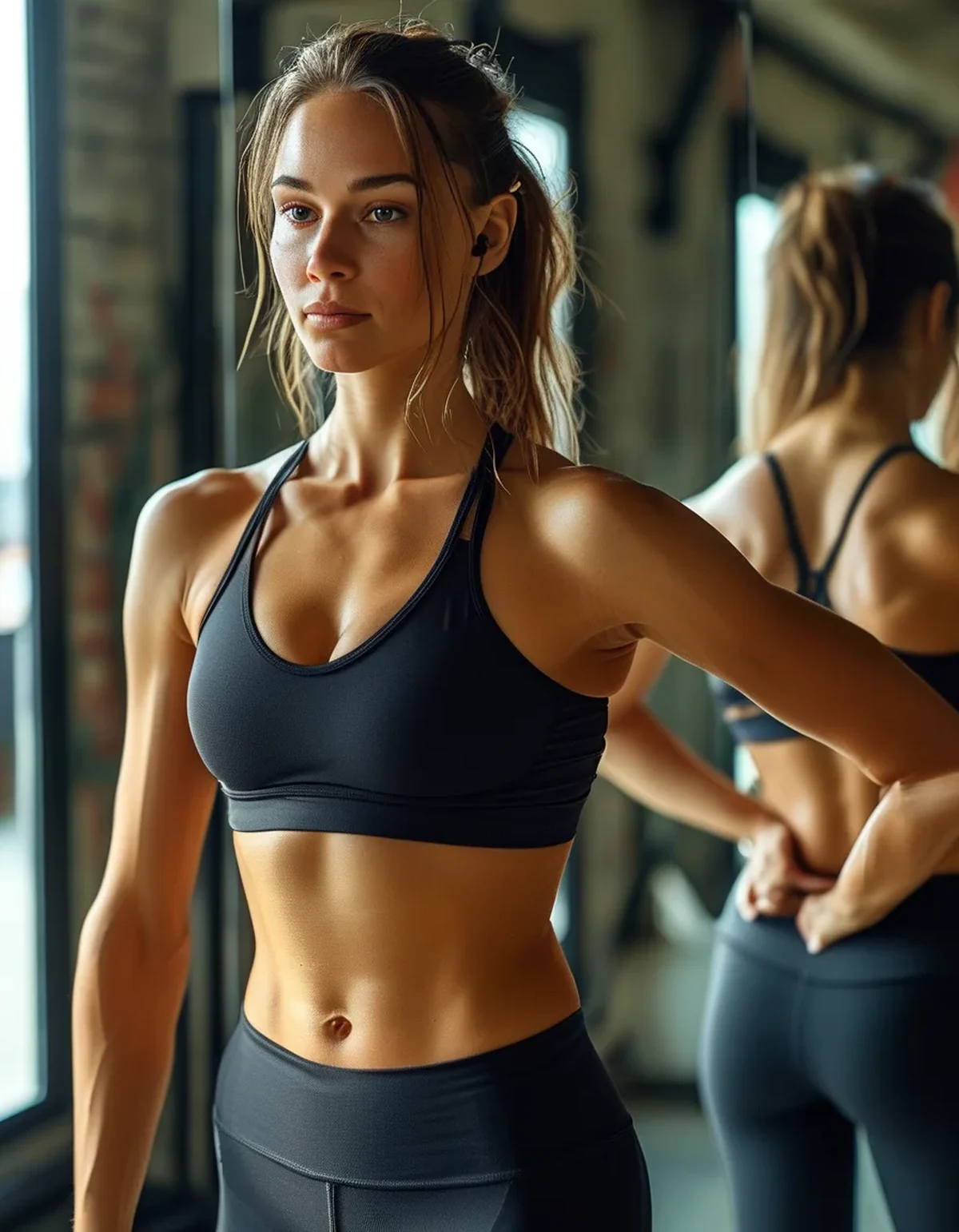
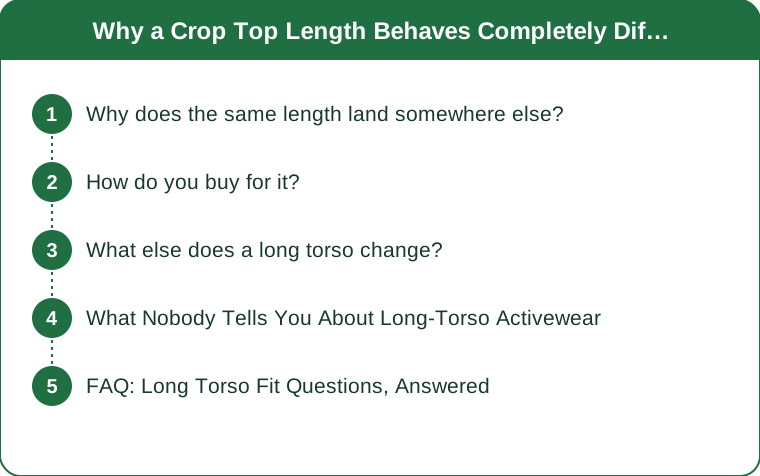
The model: sits at the waist.
You: sits above the ribs.
Same garment, same size, different distance from shoulder to waist.
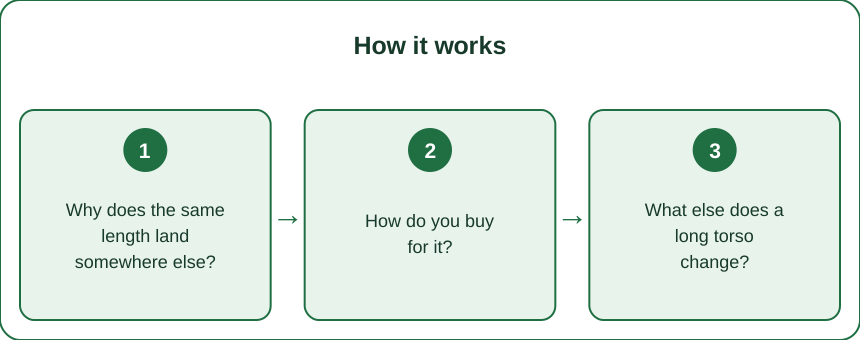
Why does the same length land somewhere else?
Six mechanics that explain the gap.
Body length is measured from the shoulder, not from the waist. A stated 40cm body length means 40cm down from the highest point of the shoulder. Where that ends depends entirely on how long your torso is, and nobody photographs it on a long torso.
Body length grades minimally across sizes. Brands add width generously between sizes and body length only slightly — often 1-2cm per size. Sizing up for length gains you almost none and adds width you did not want.
The reference model is usually 175-180cm with average proportions. Product photography is shot on a fit model whose torso length is by definition close to the grading assumption. Your result differs by exactly your deviation from that assumption.
Torso length varies independently of height. Two people of the same height can have very different torso-to-leg ratios. This is why some tall women find standard tops fine and others find everything short — height alone does not predict it.
Stretch fabrics ride up further. Activewear moves. A top that starts borderline ends higher after the first set, and every overhead movement resets it higher still.
Waistband interaction changes everything. A high-rise legging waistband effectively raises where the gap begins. Pairing a borderline top with a high-rise bottom often solves the whole problem without changing the top at all.
How do you buy for it?
Six practical steps.
Measure your own torso length. From the highest point of your shoulder, straight down the front to your natural waist. Write it down. Compare it to the stated body length of anything you are considering.
Shop by stated body length, always. Product pages increasingly list it under measurements. If a brand does not publish it, that is information about the brand.
Measure a top you already own that sits right. Lay it flat, shoulder seam to hem. That number is your target and it works across every brand.
Do not size up for length. You gain 1-2cm and a top that is loose everywhere else. Look for tall or longline ranges that grade body length specifically.
Pair strategically. A high-rise waistband at 12-15cm deep changes where the midriff gap starts and often resolves a borderline top entirely.
Test with the movement you will actually do. Raise both arms fully overhead in the fitting room. If the top is where you want it after that, it will hold in a session. If not, it will not — the standing test tells you nothing.
Seasonal note: the shift into autumn is when this becomes a layering problem rather than a coverage one. A borderline top under an open jacket is fine; the same top under a fitted layer creates a bulk line at exactly the wrong point. Getting body length right now sets up the whole layering season.
What else does a long torso change?
Six related fit issues with the same root.
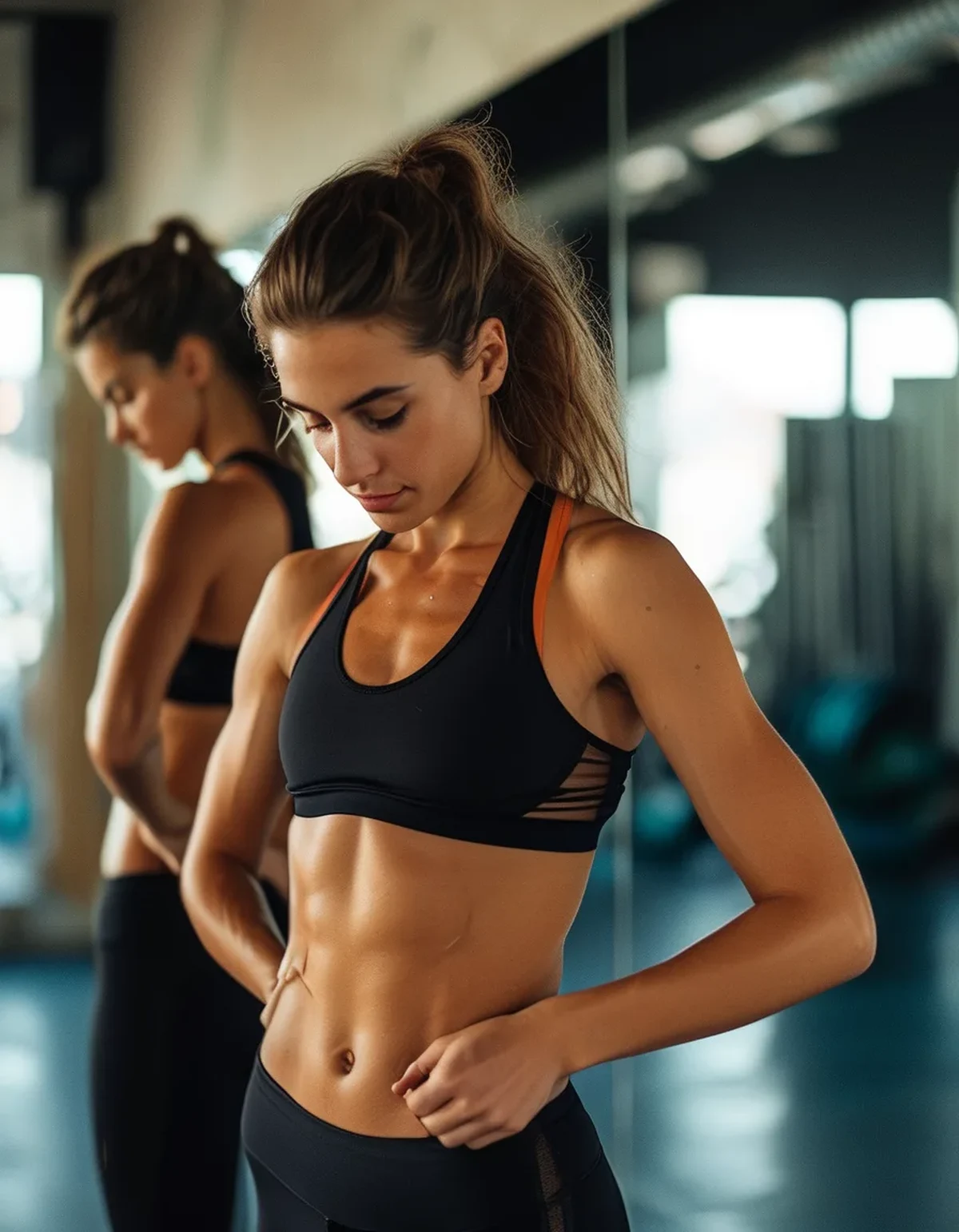
Sports bra underband position. A longer torso means the band sits differently relative to your ribcage, and a band designed for average torso length can ride up under the bust. Band fit is about ribcage circumference, but band position is about torso length, and the two get confused constantly.
One-piece garments are the hardest category. Bodysuits, unitards and swimming costumes have to span the whole torso and are graded around average length. Look explicitly for long-torso versions rather than sizing up, which adds width without adding length.
Legging rise interacts directly. Longer torso means your natural waist is further from your hip, so a high-rise legging sits lower on you proportionally. A wide waistband compensates for some of it.
Jacket and hoodie length. A hoodie that hits at the hip on average proportions hits above it on a longer torso, which looks unintentional rather than cropped.
Seat belt and backpack strap positions sit differently, which is a small comfort factor that adds up over a day.
Dress waist seams are the least forgiving of all. A defined waist seam either lands at your waist or it does not, and there is no adjusting. For a long torso, unstructured or elasticated waists are considerably more reliable.
What Nobody Tells You About Long-Torso Activewear
Nobody tells you that height and torso length are different measurements. Two women of identical height can need completely different tops. This is why generic tall advice fails half the people it is aimed at.
Nobody tells you body length is the number that matters. Everyone shops by size. Body length is the measurement that determines whether a top does what the photo shows.
Nobody tells you that sizing up barely adds length. It adds width and about a centimetre. This is the most common and least effective response to a length problem.
Nobody tells you the waistband is half the solution. A deep high-rise waistband can resolve a borderline top completely, and it is much easier to find than a genuinely longer top.
Nobody tells you to do the arms-overhead test. Standing still in a fitting room proves nothing about a garment that has to move. Ten seconds of overhead reach settles it.
Nobody tells you to keep the numbers on your phone. Torso length, rise, inseam, and the flat measurements of the three garments that fit you best. Shopping becomes filtering, and returns drop sharply. It is fifteen minutes of work once.
FAQ: Long Torso Fit Questions, Answered
Why does a crop top sit higher on me?
Body length is measured from the shoulder seam. A longer torso means the same measurement ends further from your waist.
How do I measure my torso length?
From the highest point of your shoulder, straight down the front to your natural waist. Save the number.
Should I size up for more length?
No. Body length grades only 1-2cm per size, so you gain almost nothing and add width. Look for tall or longline ranges instead.
What waistband depth helps?
12-15cm high-rise waistbands raise where the midriff gap starts and often resolve a borderline top entirely.
Why does my sports bra band ride up?
Band fit is set by ribcage circumference, but band position is set by torso length. A longer torso changes where an average-graded band sits.
How do I test a top properly?
Raise both arms fully overhead in the fitting room. Where it sits after that is where it will sit in a session.
Are one-pieces worth trying?
Only in long-torso versions. Standard bodysuits and costumes are graded around average torso length and sizing up adds width, not length.
TL;DR:
- Crop length is body length from the shoulder seam — a longer torso ends higher relative to your waist.
- Body length grades only 1-2cm per size, so sizing up is not a length fix.
- Measure your torso length and a top that fits, and shop against those numbers.
- A 12-15cm high-rise waistband resolves many borderline tops without changing the top.
- Always do the arms-overhead test in the fitting room.
Measure the shoulder-to-hem length of the top that sits exactly right on you and save it. That one number replaces every size guide.
See It in Motion
Seen here: High Waist Embossed Yoga Leggings with Side Pockets — shop it on bubblelime.com
Keep Reading
This article is for general informational and styling purposes only. Fit, sizing, and product availability may vary.